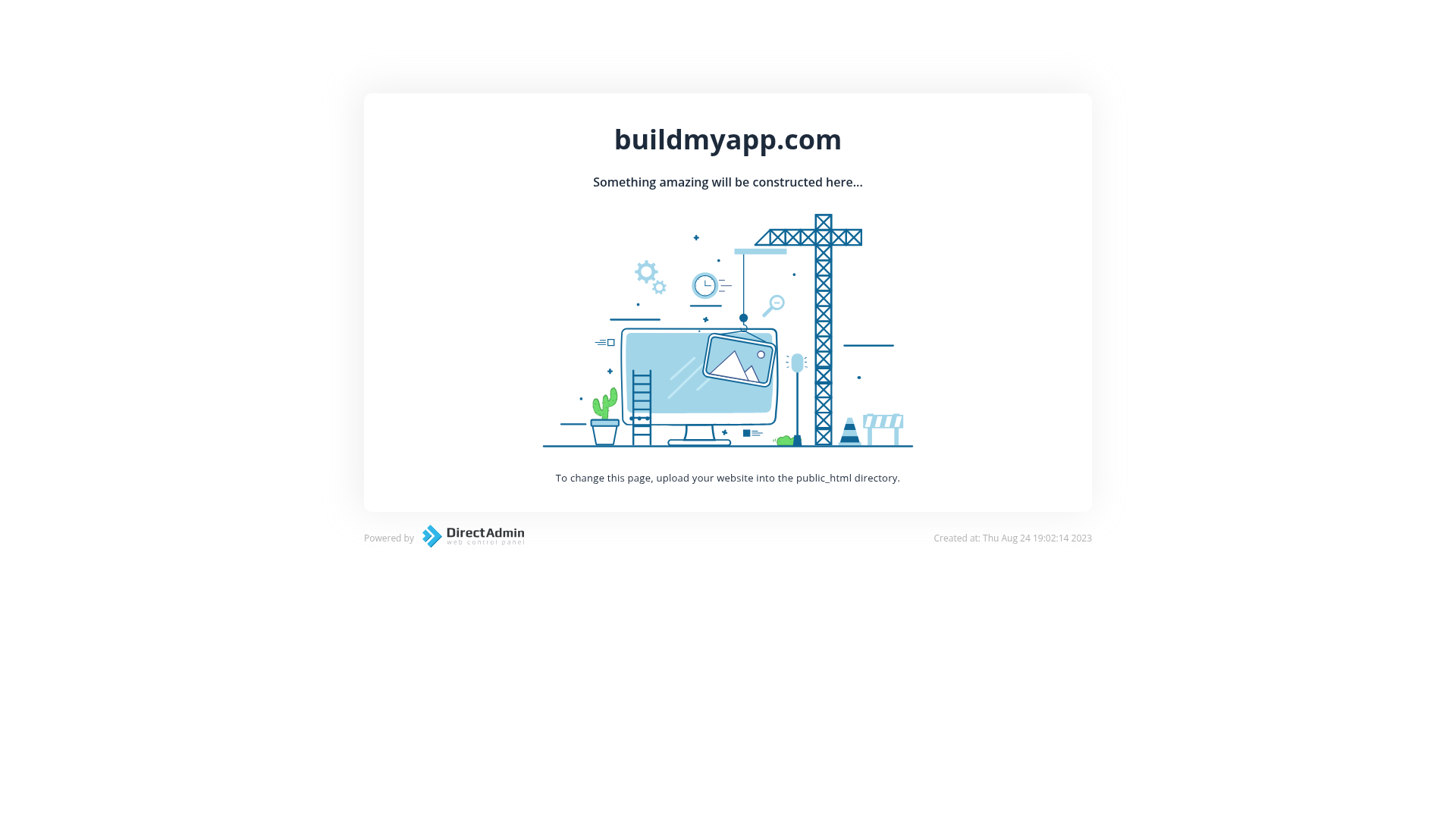
buildmyapp.com
A blank app-builder placeholder site, not yet a live product.
Tagline
Your app starts here.
Replace the default page with a real launch.
Reserved for the app you’ll build next.
Stop showing a blank domain. Show intent.
Category-defining: the domain is reserved for a future app-building product, but no category can yet be validated from the live page.
There is no actual product copy, feature set, or workflow to position from; the only honest angle is that this is a not-yet-launched app-builder domain.
Alternative-to: a replacement for the default hosting placeholder page that appears before a real launch.
The page is literally the hosting provider's default content, so the immediate 'alternative' is the eventual branded product site that replaces it.
Pain-killer: eliminate the embarrassing blank-domain experience with a real homepage and launch message.
The current experience communicates nothing except inactivity; the most urgent pain is not product complexity, it's the absence of a credible live web presence.
Primary user
Website owner or developer who has not replaced the default hosting page yet
ICP #1
Solo founder launching a new SaaS brand on a fresh domain
Pain
They need a public-facing presence fast, but the domain currently shows an empty placeholder instead of the product.
Why this solves
This page doesn't solve the problem yet, but it indicates the deployment environment is ready and only waiting for the real app files to be uploaded.
ICP #2
Freelance web developer setting up a client site on shared hosting
Pain
They need to verify the server is pointed correctly and the site root is writable before replacing the default host page.
Why this solves
The explicit public_html instruction is exactly the breadcrumb a developer looks for when confirming hosting access and deployment location.
ICP #3
No-code builder or product marketer prepping a landing page release
Pain
They are about to announce the product but currently have no messaging, no CTA, and no live product explanation on the domain.
Why this solves
The page is a clear signal that the launch is not ready; once replaced, it can support the kind of simple landing page they need.
Strengths
- +It clearly signals that the site is not finished rather than pretending to be complete.
- +The hosting instruction is explicit, which is useful for whoever owns the server.
- +The page loads cleanly with minimal clutter, so there is no accidental broken UI beyond the placeholder.
Weaknesses
- −There is zero product explanation, so a visitor cannot infer what buildmyapp.com actually does.
- −The page has no CTA, no signup, no demo, and no navigation.
- −The copy looks like a generic server default, which kills credibility for a brandable SaaS domain.
- −The product name is repeated but never defined, so the page creates more confusion than interest.
- −The timestamp and hosting note make it feel like a forgotten staging artifact, not an intentional launch page.
Fix these
- Replace the placeholder with a real hero section that explains what buildmyapp.com does in one sentence.
- Add a primary CTA above the fold, likely 'Get early access' or 'Request a demo,' depending on the product.
- Show 3 concrete use cases or screenshots immediately so visitors can understand the workflow in under 10 seconds.
- Add trust signals: founder name, company logo, waitlist count, or a short product teaser video.
- If the product is not ready, use a polished coming-soon page instead of the hosting default so the domain feels intentional.
Drop-in replacement copy
Headline
Turn your blank domain into a real launch
Replace the default host page with a homepage people can trust.
Look live, not forgotten
Default hosting pages make a project feel inactive. Replace that first impression with a page that feels intentional and ready.
Explain the product fast
Visitors should know what you do in one glance. A clear homepage beats a placeholder every time.
Add a real next step
Give people something to do: join a waitlist, request access, or book a demo. A dead-end page wastes traffic.
Ship before the full app is done
You do not need the complete product to look credible. Start with a simple launch page and build from there.
FAQ
Is this a real product yet?
Not yet. The live domain currently shows a placeholder, and the goal is to replace it with a proper launch page.
Who is this for?
It’s for founders, developers, and agencies who need a domain to look credible before the full app is finished.
What should the first page include?
A one-sentence description, one clear CTA, and enough context that a visitor understands the product in under 10 seconds.
Do I need screenshots or a demo?
Not always, but they help. Even one image or short teaser makes the page feel real much faster than text alone.
Why not keep the default host page for now?
Because it looks accidental. A custom page tells people the project is active, intentional, and worth paying attention to.
Blank domains kill launch trust fast. If your site still shows a hosting placeholder, people assume the product is dead, the founder vanished, or the launch got delayed. I’d rather see a simple coming-soon page than a default server screen.
We shipped the wrong thing first. Not the app. The blank placeholder. That’s the problem with fresh domains: they technically work, but they look abandoned. Fixing that is step one before any real launch.
New domain, zero product, obvious problem. buildmyapp.com currently shows a default hosting page instead of a real brand. That’s useful for one thing: proving the server is live. Now the real work is turning it into something people can trust.
This is what a launch page needs: 1. One sentence on what it does 2. One CTA 3. Proof it’s real 4. No hosting boilerplate Anything less and visitors bounce. The first version should explain, not impress.
Most founders lose visitors here. They buy the domain. Then forget to replace the host default. So the first impression is a timestamp, a placeholder, and a note about public_html. Not exactly confidence-building.
People trust clean launches more. A page that says exactly what the product is beats a placeholder every time. No one shares a blank domain. They share something that looks finished, even if it’s version 1.
The real product isn’t visible yet. That’s fine. But the domain should still feel intentional. If you’re launching something new, the first job is replacing the default host page with a message people can understand in 5 seconds.
Building in public starts before code. It starts with not looking invisible. A placeholder page tells the truth, but it doesn’t sell the next step. The next step is a simple homepage that says what’s coming.
Five seconds is enough to confuse users. If your homepage doesn’t say who it’s for and why it exists, they leave. A default hosting page is even worse: it tells them the site is not ready. That’s a conversion killer.
The best launch pages look obvious. Not clever. Not busy. Just clear. A visitor should know in one glance whether this is for them. That’s the difference between a forgotten placeholder and a site people actually remember.
Angle: why placeholder pages hurt credibility
Most founders underestimate how much damage a default hosting page does. It doesn’t just look unfinished. It makes the whole brand feel temporary. If someone lands on your domain and sees a generic server placeholder, they don’t think “early.” They think “inactive.” That’s especially bad for solo founders launching a new SaaS. You can have the product ready, the positioning ready, even the pricing ready - and still lose trust because the homepage is still the host’s default screen. I’d argue the first job after buying the domain is not the app. It’s the public face. One sentence. One CTA. One reason to keep reading. You don’t need a perfect launch page. You need a page that proves the project is alive. That small difference changes how people talk about you, share you, and judge whether you’re serious.
Angle: what makes a launch page feel intentional
A launch page doesn’t need to be clever. It needs to be intentional. The default hosting placeholder is the opposite of that. It says nothing about the product, nothing about the audience, and nothing about what happens next. If you’re shipping a new app, your homepage should answer three questions immediately: • What is this? • Who is it for? • What should I do now? That’s it. People don’t need your entire story on day one. They need orientation. If your site is still showing a generic server message, treat that as a deployment issue and a marketing issue. Because it is both. The fastest way to look credible is not more features. It’s a page that makes sense in under 10 seconds.
Angle: build public presence before full product
A lot of founders wait too long to make the site public. They want the full product before the homepage. The result is a domain that sits there looking empty. That’s backwards. The public-facing page is part of the product. It’s where trust starts. It’s where people decide whether to bookmark, share, or ignore you. For buildmyapp.com, the immediate problem is obvious: the current page looks like a hosting default, not a brand. That’s fine as a technical signal. It’s terrible as a public signal. So the move is simple: replace the placeholder with a clean coming-soon page, explain the product in one sentence, and add one clear CTA. You do not need to overbuild the launch site. You need to stop leaking trust.
Tagline
A blank app site, ready to become real
Description
buildmyapp.com is the domain before the launch page. Right now it’s a placeholder; the goal is to turn that blank space into a clear homepage, waitlist, or early-access page that actually tells visitors what’s coming.
Maker's first comment
I built this because I kept seeing the same problem: founders buy a domain, point DNS, and then leave the default hosting page live for days or weeks. That page technically means the server works, but from a visitor’s point of view it feels like nothing is happening. buildmyapp.com is the exact opposite of that feeling. The current state is intentionally bare, but the real purpose is to become the first public layer of a new app: a simple homepage, a waitlist, or a coming-soon page that explains the product without making people guess. I’m launching this in public because I want feedback on the most useful version of that first page. If you’ve ever shipped a product and had to replace a dead-looking placeholder with something credible fast, I’d love to know what you would want on that page first.
Pinned maker comment
I’m mainly looking for feedback on the first impression: what should the homepage say in one sentence so a visitor instantly understands what’s coming?
Meta
Still showing a blank hosting page?
Hypothesis: solo founders and freelance developers need a faster way to replace default hosting placeholders with a credible launch page. If your domain is live but looks unfinished, buildmyapp.com gives you a cleaner first impression.
Google Search
Default hosting page replacement
Hypothesis: people searching for a fast way to replace a placeholder site want a simple, public-facing homepage before the full app is ready. buildmyapp.com is built for founders who need the domain to look intentional now.
Reddit Promoted
Your domain is live, but it looks dead
Hypothesis: indie hackers and solo founders will respond to a tool that turns a blank domain into a real launch page faster than they can build the product itself. If your site still shows a placeholder, this is for you.
Subreddits
r/SideProject
Show the ugly truth of launching on a blank domain and how you fixed the first impression
Rules: No pure self-promo; share the problem, screenshots, and what you learned
r/indiehackers
Post a build-in-public story about replacing placeholder pages with a real launch homepage
Rules: Value-first posts perform best; explain lessons, metrics, or process
r/microsaas
Talk about the smallest useful version of a launch page for a new SaaS
Rules: Keep it specific to tiny SaaS products; avoid spammy launch links
r/EntrepreneurRideAlong
Document the domain-to-launch-page transformation as a founder journey
Rules: Must be a journey post, not a direct ad; show progress and context
r/startups
Ask what makes a first homepage feel credible for a new product
Rules: Discussion-heavy; avoid promotional tone and lead with a real question
Communities
Post lessons from replacing a placeholder with a launch page, then comment thoughtfully on other founders’ landing page threads.
Only submit if you have a genuinely useful teardown or launch lesson; keep the title factual and let the discussion happen.
Share the before/after of the homepage and the exact copy changes that made it feel real.
Cold outreach template
Hey {firstName} - saw {context} and it reminded me of how many founders leave the default hosting page up too long. If you want, I can show you a one-page launch version that makes the domain look real in under a day. Worth sending over?
Product Hunt timing
Launch on Tuesday at 12:01am Pacific Time. That gives you the full workday for US makers, avoids weekend traffic drop-off, and fits the ICP of founders and indie hackers who check PH early in the week.
Indie Hackers post ideas
- 01How I turned a blank domain into a credible launch page
- 02The first 3 lines that make a placeholder site feel real
- 03What founders should replace before they announce a new SaaS
Competitor alternatives
Current tone of voice
Bare-bones, utilitarian, and unmistakably placeholder-like; the clearest quote is "Something amazing will be constructed here..." followed by "To change this page, upload your website into the public_html directory."
Your kit is ready. Sign up free to unlock, takes 10 seconds.
7 more X posts · 2 LinkedIn · Product Hunt copy · ad hooks · 100-user playbook · landing critique